

Goodman calls it a day
PUBLISHED: November 9, 2017
After almost 43 years in the horse racing game, trainer James Goodman has decided to hand in his trainer’s license and Dec 16 marks the last day…
Veteran trainer James Goodman has decided to call it a day. He will be handing in his trainer’s license after almost 43 years in the game. On 16 December, his horses and stable equipment will be sold lock, stock and barrel at his Summerveld stables.
Goodman was granted his license on 1 January 1975 and started training at the Vaal with just six horses. In that same year he won the equivalent of the then Grade 1 Germiston November Handicap (Charity Mile) with Profumo, a “PE chuckout” ridden by Robbie Hill.

James Goodman (Sportingpost)
He moved to Newmarket and later was one of the pioneering trainers at Randjesfontein, where the initial years were hard but where he enjoyed a high rate of success with runners like Duke Of Marmalade, All The Rage, Natural Force, Last Watch and Gold Tax. He trained over 40 Graded winners, including seven Grade 1s.
Seeking a more relaxed lifestyle, Goodman moved his operation to Durban in 2004 and decided on a “boutique yard” of 30 horses, which suited him very well and brought the peace of mind he desired, but the string dwindled down to between 15 and 20 in recent years.
Goodman said on Wednesday morning: “I can’t make a living anymore. Little stables can’t survive and I predict that more small trainers will give it up soon. You have to run a big stable these days to make a decent living. Costs are high and if you haven’t got a good horse or two in the stable it’s impossible to keep going.
“I’ve thrown money at it to keep going. My partner Sandra and her parents have also helped, but there are no more funds left and this is where it’s at now. Our TV show ‘Winning Ways’ lost a few sponsors and that was money that plugged a few gaps.
“For the last two years I haven’t been able to find a single new owner for my yard. Earlier this year I bought five horses at a sale and I tried to syndicate them, but I couldn’t secure even one owner to take shares, not even among existing patrons and friends. As it stands I own 55% of my own stable, so I am responsible for more than half of the feed bill to start. Nobody can keep this business afloat without financial backing.”
Goodman believes his well-publicised “caffeine” case resulted in a poor impression created in public and said: “The National Horseracing Authority’s lawyer Jonathan Witts-Hewinson went vigorously after me. They attacked me as an individual and as a trainer, making derogatory statements, accusing me of being obstructive when all I wanted to do was prove my innocence.
“While I won the case, it cost me a huge amount of money. I didn’t lie down and in the end I was vindicated, but the NHA will only be paying my costs from the High Court Application and nothing before that.
“In their commentary on the matter the NHA admits that there was a reasonable apprehension of bias on the part of Witts-Hewinson, the chairman of the inquiry board but they still put claim on the illegal substance found in one of my horses.
“The fact is, my witness Dr Tobin had not been allowed to testify in the case to refute the allegations, the judge calling it ‘manifestly unfair’! Had Tobin been allowed to speak, I believe we would have won the case on merits alone, coming up against Dr Schalk de Kock of the NHA. But we were denied. This case had a major effect on my training career.”
It’s perhaps all water under the bridge now and Goodman, a man with an extraordinary cheerful and enthusiastic approach to life, will not be lost to racing forever. He will continue in his role as anchor of ‘Winning Ways’ and said: “I will stay involved in bloodstock, become an agent. I remain a horseman. I can still put my expertise to good use for clients.”
He will be missed by his colleagues at Summerveld and by punters and fans around the land and he will miss his horses, but Goodman said: “The decision is made. On 16 December I will be selling everything, from horses to bridles to the last feed bucket.”
– Turf Talk.

Why Cumulus ran at Turffontein
PUBLISHED: November 9, 2017
Rob Haswell takes it upon himself to explain the reason behind the decision to run Cumulus at Turffontein…
Trainer Nathan Kotzen has been criticised for running my horse Cumulus, at Turffontein last Saturday, against Mujaafy, trained by his former ‘boss’ Mike De Kock. But that criticism is wide of the mark, as the decision was mine, and I would submit that it was a sound decision.
Allow me to expand. Cumulus won his first start impressively and in a good time over 1200m at Scottsville, while I was overseas. In his second run, he faded somewhat to finish fifth to Zen Arcade over 1400m on the Greyville poly, and it is worth noting that Zen Arcade was entered, and indeed won, the Graham Beck Stakes at Turffontein last Saturday. I was anxious to see just how good Cumulus is over 1200m on turf, but with Scottsville out of use until December, and with Greyville now primarily a poly track – especially if there is any rain – I began to look at the Vaal and Turffontein meetings in November. Anton Procter, who bred Cumulus, encouraged me but again the decision of when and where, and to compete in a race which included runners from the De Kock and Tarry stables, was mine. De Kock versus Kotzen was not a consideration.

Cumulus (Candiese Marnewick)
Of course, there were Doubting Thomas’s who felt that little old Cumulus would embarrass us in such good company – pick an easier race they opined. But, apart from the fact that they don’t pay the training fees, I wanted to answer a fundamental question: just how good is Cumulus? We knew he was fast, working well and racing fit. We also knew he was very quick into his stride and cruising speed over 1200m, and that he kept finding over that distance. Therefore, I was confident of a place cheque to cover the costs of racing him on the Highveld. Of course, Cumulus was up against Mujaafy, who had won his maiden impressively and could be anything, but his merit rating was 84 while Cumulus had been rated 87 after his first win. So, was Cumulus worth his merit rating, and wouldn’t the Turfffontein race answer that conclusively? Besides it seemed more sensible than running him in a local 84, in which a placed run would only see his rating increased even higher, and not tell us anything we did not already know about Cumulus.
I must admit that having been born at the Turf Club Nursing Home, which looks onto the Turffontein course, where my father had raced horses, and a stone’s throw from Wembley Stadium where he staged several world title fights, added a boyhood dream element into decision.
Although he was well beaten, Cumulus did not disappoint and was clearly second best only to a horse owned by the Crown Prince of Dubai. Even a highveld thunderstorm did not phase Cumulus, and given that Mujaafy looks to be a future champion, his run was certainly full of merit, and confirmed his rating. After the race Mike de Kock graciously said “I am sorry you had to come all the way here and bump into a champion, who may even become a stallion of note”. Anthony Delpech, who rode Mujaafy and had won on Cumulus, added “I told Craig Zackey that your little horse can really run”.
So for me it was mission accomplished, as Cumulus ran a blinder and Nathan Kotzen deserves nothing but praise on a job well done. We may well have horse will travel again, if the paucity of turf races in this province continues.
By Rob Haswell

UK’s winning system
PUBLISHED: November 9, 2017
Some punters rely on form study, but others with less time have tried taking the analysis out of the equation by following a system.
An interesting study done by The Mirror racing correspondent in England a few years ago revealed a system, which involved an increase in distance for a young horse making its handicapping debut, to be the most consistently profitable. However, it would require a lot of patience and discipline to follow.
A letter sent by a reader was the prompt for the study.
The reader had the idea of backing every horse which was making its handicap debut having had exactly three runs.
The Mirror correspondent’s research revealed only 20.8 percent of such runners won, and it amounted to a loss of 9p for every £1 staked.
However, the system got him thinking and he posed the question: What would happen if such a horse i.e. one making its handicap debut after having had exactly three runs, made that handicap debut in a race where the distance of the race was different to that which it had campaigned over before?
He elaborated, “Just think about it. If you were a trainer or owner and the breeding of your pride and joy suggests it needs at least a mile to show its best, there is nothing in the rules of racing to say you can’t run it three times in sprints, get a handicap mark, and then run it in a handicap over what is likely to be a more suitable trip.”
He continued, “Even on a powerful computer the stats for this take some time to calculate but it was worth doing.
The rules he set were:
On the Flat, look for a horse making its handicap debut in a race that is more than a furlong and a half further than it had raced over on any occasion before.
The result was a return of £1.11 for every £1 staked – or a profit of 11 per cent.
He concluded, “Interestingly, the profit was pretty consistent each year for the last ten years.”
Unfortunately, applying it to South African racing would be impossible due to local trainers’ obstinacy in running maidens in handicaps.
Like the UK, a non-winning maiden in South Africa is allowed to run in a handicap after three runs, but unlike the UK a maiden running in a handicap in South Africa is a rare occurrence.
It makes sense to run such horses in handicaps as they will be up against horses with similar merit ratings, while in maidens the same race can include anything from future champions to battlers.
There is no certainty in racing and no replacement for form study, finding value and being disciplined in only betting on value.
However, with small money, following systems can provide a lot of fun.
Some of the popular systems regularly applied were listed by racing man Glenn O’Brien:
1) 1400m specialists: The logic is this trip produces racing’s most potent specialists, being neither a sprint nor a mile. These specialists usually have the upper hand over failed sprinters stepping up in trip or failed milers dropping in trip. To apply it take races from 1350m to 1450m and back the shortest priced horse who has recorded two or more wins over the distance.
2) Against the short prices: Logic: When there is a short-priced favourite, the true value often lies with the main danger.
3) Backing the best horse: This system identifies the highest rated horse at any meeting and backs it. Logic, true class can pull a horse through under any circumstance.
4) Beaten favourites after a rest: A beaten favourite might not have run its true race and to make amends the connections wait for an ideal opportunity to make amends. To apply this system the next race must come over the right distance at least 30 days after the defeat.
5) Beaten favourites with sights lowered: A beaten favourite next appearing over the right distance in a lower class or lesser quality race.
Glenn O’Brien lists over 50 systems on his website: www.glennobrien.net/horse-racing-systems.html
By David Thiselton
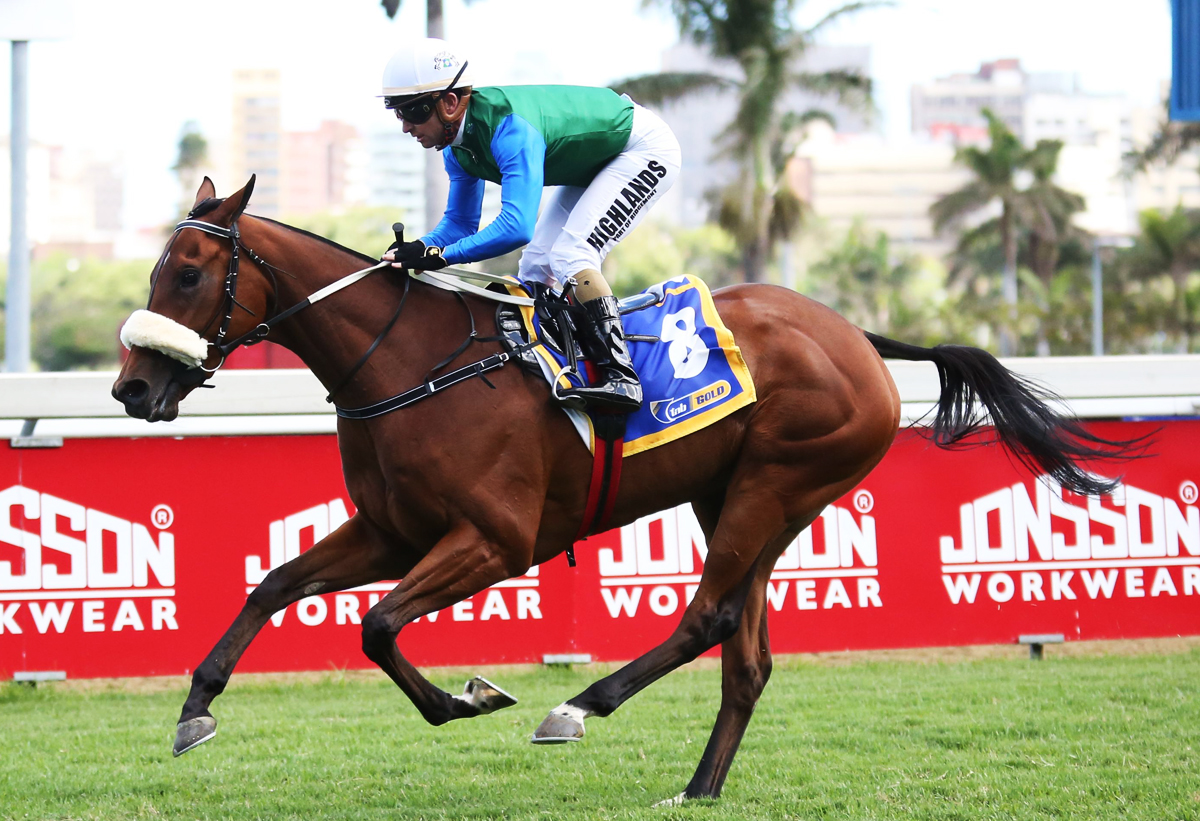
Cheyne reads the oracle
PUBLISHED: November 9, 2017
Greg Cheyne was sitting on gold yesterday at Greyville Racecourse as Emma’s Oracle waltzed home easily to break her maiden at the first time of asking…
Retained riders, lucky enough to earn a contract, are a travelling band, clocking up the air miles as they flit from centre to centre without making a dent in their own wallets. The retainer does come with its share of pressure but it paid dividends for Greg Cheyne, retained by the combination of the Kieswetters of Highlands Stud and Ridgemont Racing, as Emma’s Oracle waltzed home to shed her maiden in facile fashion in the sixth at Greyville yesterday.
There were a few who in the race that fancied their chances, notably supporters of The Matador for Yadav Singh, saddling his first runner since taking out his trainer’s brief again, but Duncan Howells will have been well aware of what he was up against given that the runner-up had recently left his yard. In retrospect, Emma’s Oracle obliged at fairly generous odds of 9-10.
Emmas Oracle (Candiese Marnewick)
Age is never a factor when a horse stays sound and enjoys his racing and Crime Victim rewarded owner/breeder Barry Readon with his fourth win from 40 starts, giving Howells his second winner of the afternoon, when accelerating away from his field to win the Racing. It’s a Rush Handicap over 2400m. Crime Victim had been dropping steadily in the handicap but his poly debut last time out saw him run well below what he is capable off.
The handicappers generously dropped him a further four pounds after that race but are likely to put a cork in the gap after yesterday’s fluent victory.
Flichity By Farr franked the form of recent KZN Fillies Guineas Trial winner Hashtagyolo, when speeding to a comfortable victory in the Track & Ball Fixed Odds Handicap.
Under a polished ride from Anthony Delpech, he had Alyson’s Wright’s filly tracking the early pace before pushing the button two furlongs out and accelerating away to win as she liked with favourite Shirley Valentine chasing shadows.
Paul Lafferty got his meeting under way in good style as apprentice Diego de Gouveia took advantage of a strong tail win to lead all the way on outsider Exquisite Eight and Francesco sealed a fine afternoon in the office for Lafferty as red-hot apprentice Ashton Arries rode a confident race to steer his mount to a comfortable victory.
Outsider Air Salute saw the Pick 6 dividend rocket in the last as the Lezeanne Forbes-trained gelding belied his current form. He hooked up with strong favourite Sovereign Master at the top of the straight but keep rolling resolutely to win rather comfortably at the death.
By Andrew Harrison
L’Ormarins racing festival
PUBLISHED: November 8, 2017
Start preparing your blue and white outfits as the dates for next year’s the L’Ormarins Queen’s Plate Racing Festival…
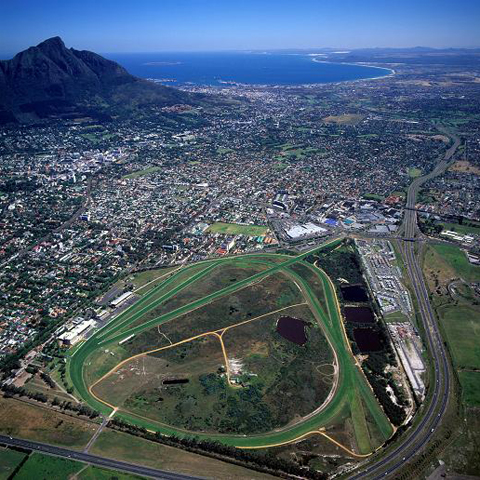
Start preparing your blue and white outfits as the dates for next year’s the L’Ormarins Queen’s Plate Racing Festival, when horseracing and high society converge at Kenilworth Racecourse, have been set for Friday 5 and Saturday 6 January.
The L’Ormarins Queen’s Plate meeting is South Africa’s oldest race day, dating back to 1861. Last year it became the country’s first multi-day racing festival in the mould of famous international racing festivals such as Royal Ascot, Glorious Goodwood and the Kentucky Derby.
Friday will be an elegant and relaxed afternoon Garden Party, with the racing highlight being the Gr 2 Cartier Sceptre Stakes – the premier sprint race for fillies in the Western Cape.
Beyond the track, the day will also see live jazz, a Summer Harvest Table under the trees, along with bottomless complimentary L’Ormarins Brut Cap Classique and Heineken on tap. Garden Party tickets will be R500, and will additionally grant guests access to the following Saturday’s Style Lounge and all-too-famous after party later that evening.
As is tradition, the running of the Gr 1 L’Ormarins Queen’s Plate will take place on Saturday, when South Africa’s finest thoroughbreds compete for the R1.5 million purse.
Tickets for Saturday will range from the Style Lounge, priced at R350 to the Kenilworth Jazz Room at R1,500 per person, with spots such as the popular Stud Club at R1,300 and picnic style Paddock Sites at R10,000 per table.
The exclusive Garden Party, with free flowing L’Ormarins Brut, Heineken, harvest table lunch and jazz, is the perfect way to warm you up for the second day’s racing on Saturday. Limited to 500 people. At R500 your ticket will include:
- L’Ormarins Brut.
- Heineken Draft.
- Harvest Table for a light, summery lunch from 1pm to 3pm.
- A free Style Lounge ticket for racing on Saturday 6 January.
- Live jazz.
- Access to purchase from local bars & racing.
Find out more about the various hospitality options at www.lqp.co.za/tickets-hospitality/. Tickets will go on sale at Computicket on 16 November 2017.