Every thoroughbred sale is a well of hope for those with the means and in some cases, those without the means, ask any trainer forced to retain shares in many of their string.
The million-rand tag for for an unknown yearling, with only its family and appearance to recommend them, has long been for the elite few. Some turn out fast, many turn out slow and quite a lot are in between, but the million figure is a watermark where expectations lap the levee banks menacingly and “I told you so” is only a short swim in either direction.

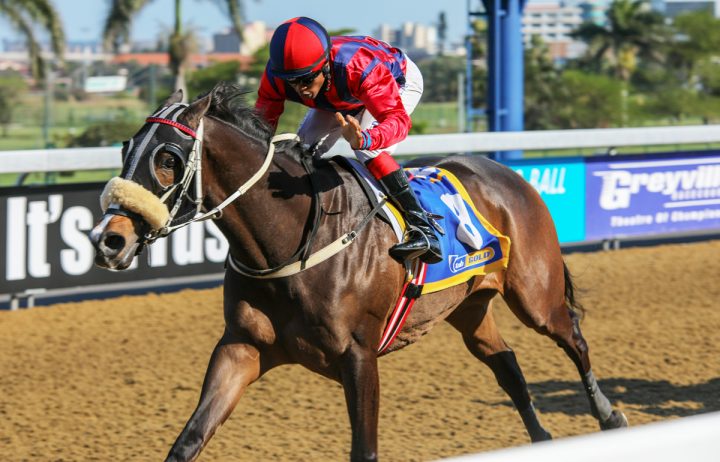
Gunner (Candiese Marnewick)
But as the cliché goes, “not trainer has ever committed suicide with an unraced yearling in his yard”. Hope springs eternal, but even for trainers who are fortunate enough to pick from the top of the tree, life is not easy and the regally bred R1 million yearling can become an albatross around their necks – owners turn sour and the ignorant public demanding results.
The price tag at least suggests that the horse has everything in the right place, but that is not a guarantee. As John Dunlop, trainer of Snaafi Dancer, a $10 million ($25 million in current dollars) yearling, lamented, “He walked very well, looked the part but was very slow.” So slow in fact that his owner, Sheik Mohammed bin Rashid Al Maktoum, thought it would be embarrassing to run him in public. Snaafi Dancer was retired to stud duty where he was discovered to have fertility problems. From two years of breeding, he sired only four foals, three of which raced with limited success.
Standing on the rails one a chilly morning it became obvious. “Those three,” said the trainer, pointing out a trio of well-grown, striking two-year-olds, “cost over a ‘bar’ each. That one over there, cost 40k and might be the best of them.”
The point here is that the price tag does not guarantee success.
But a lot can happen between sales and a race as horses mature at different rates.
The precocious two-year-old who looks a star in the making, can prove a liability at three. A recent example is Gunner, a winner of the Gr1 Premier’s Champion Stakes at the end of his two-year-old career who took a further two years to win another race.
“He was precocious as a juvenile but you have to be careful of those horses,” cautioned trainer Paul Gadsby. “I never thought he was a Group 1 horse but he’s now down to a more competitive rating,” he commented after his last win.
Gunner has since won again.
Most horses in this country, especially those at the top of the tree, seldom race past six years old. In a personal observation, sprinters are either burned out or no longer competitive off high merit ratings while stayers are poorly catered for and a commercial liability for hard-pressed breeders who need early returns on commercially bred, precocious stock to stay in business.
By Andrew Harrison