
Ramsden’s stars up for KZN
PUBLISHED: March 28, 2017
Joey Ramsden is keen on aiming Just Sensual in the South African Fillies Sprint…
Joe Ramsden can continue his recent domination of the Cape Town two-year-old races by taking the opening Maiden Juvenile Fillies at Kenilworth today with Lily Theresa.
Donovan Dillon’s mount was beaten over six lengths when only sixth on debut but 12 ran that day and this R1.2 million purchase (she is by Var out of a half-sister to the Golden Horse Casino winner Contador) seems sure to have improved.

Just Sensual (Liesl King)
Strictly on the book Regal Ruby has her measure – she finished three and a half lengths in front of her in that January race which is still best remembered for the eclipse of the much-touted Miss Frankel – but it was her second run so she does not have the same scope for improvement.
World Sports Betting makes Regal Ruby favourite at 7-2 and has slightly shortened the Ramsden filly from 5-1 to 9-2. The Justin Snaith newcomer Angel’s Trumpet is next on 11-2 and the Glen Kotzen first-timer Heart Of Legend is on 13-2.
All but two of the 16 runners are appearing for the first time and it is worth noting that all the last nine two-year-old races at Kenilworth were won by a horse who had already had a run. That said, there has been significant market support for Candice Bass-Robinson’s Public Prosecutor (14-1 to 13-2) and the Brett Crawford-trained Delia’s Delight (16-1 to 15-2).
Seven of the 12 in race two are newcomers and Ramsden is responsible for two of them – Bayeto (an Oratorio half-brother to Nocturnal Affair who won the Byerley Turk and also the Portland Handicap at Doncaster in Britain) and True Words, a R2 million Byword colt whose dam was second in the SA Fillies Classic.
“They are two really nice horses but I couldn’t prefer one above the other,” says Ramsden. “Their chances depend on what else is in the race but it is hard to win over six furlongs first time at Kenilworth.”
Why Wouldn’t Yew, fourth to Al Mariachi and Kasimir on the second of his two starts, has the best form and opened joint favourite at 7-2 with Crawford’s newcomer Captain Ram and Snaith’s debutant Fritz Nobis. True Words is on 11-2 and Bayeto on 15-2.

The Conglomerate (Liesl King)
However the one that makes the most appeal is Strategic Power. This already supported 13-2 chance carries the Mayfair colours and started third favourite when ridden by Anton Marcus on debut in January. He managed only 11th of 15 but the reason soon materialised – “he pulled up very shin-sore,” explains Vaughan Marshall.
Emerald Gal, backed from 4-1 to 28-10 for the Racing Association Maiden, wears blinkers for the first time and this should enable her to finally get her head in front. Early bookmaker prices suggested she should not beat Lindleys Lane or Le Claire who was a head in front of her last month but the Darryl Hodgson filly makes real appeal.
Race Four, the 1 400m maiden, is wide open and you can find valid reasons why each of the seven runners should not win. Strikeitlikeamatch was far from disgraced in the Sophomore and, with Aldo Domeyer on board, he gets a wholly tentative vote. But make a note of Richard Fourie’s mount C’Est La Vie as this lightly-raced gelding was yesterday backed from 6-1 to 9-2.
By Michael Clower
Varallo does Naidoo proud
PUBLISHED: March 28, 2017
Naidoo believes his two-year-olds will give him a SA Champions Season to remember…
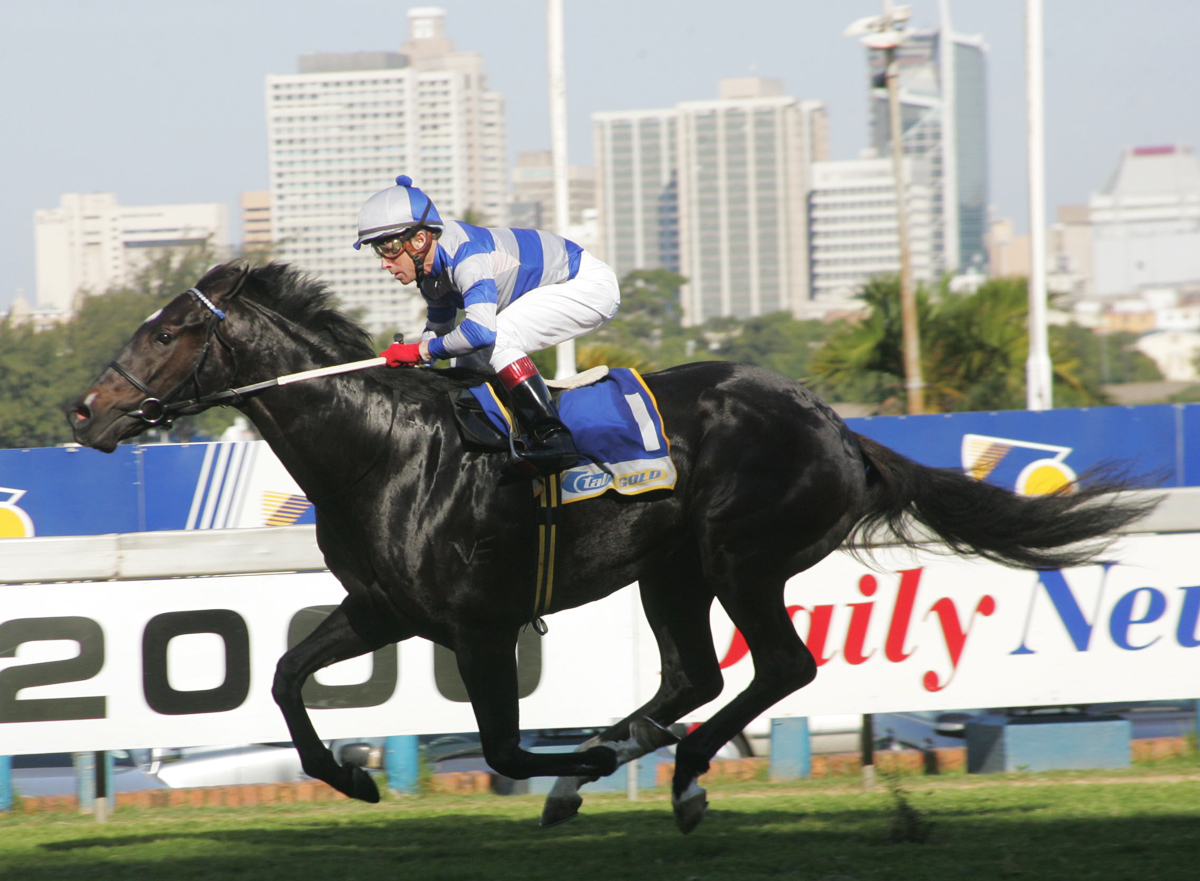
The Charles Laird-trained Var colt Varallo showed his class at Scottsville on Sunday and is one of a few promising youngsters who run in the colours of prolific KZN owner Alesh Naidoo.
Naidoo believes his two-year-olds will give him a SA Champions Season to remember.

Alesh Naidoo (Supplied)
Varallo had to be pushed along by Anton Marcus for much of the Juvenile Plate event over 1200m in order to stay in touch with the Crusade colt Caladdi, who has plenty of natural speed. Varallo ducked away from the whip when Marcus hit him with his right hand at the business end and this initially looked likely to cost him the race. However, Marcus gathered the horse and in the end the latter just required a couple of reminders to surge forward effortlessly and beat a tiring Caladdi by 2,75 lengths. Varallo is out of the brilliant sprint-miler Covenant, who won a Gr 1 over 1600m as well as three Gr 2s from 1000-1200m. Varallo’s grandam is the outstanding broodmare Secret Pact, who is an own sister to Horse of The Year London News. Other notables in this family are Secret Heart, Promisefrommyheart, Pluck, Three Hearts and Masterofmyfate. Naidoo spotted Varallo at the National Yearling Sales, waited patiently for him to come into the ring and then went to R2 million to land him. Laird described the horse on Sunday as “special” and added “when he realises what racing is all about …”. On the combination of pedigree and style of racing Varallo should stay further than sprints. However, his first Champions Season target will likely be the Gr 1 Tsogo Sun Gold Medallion on May 27 at Scottsville.
Naidoo has a Gimmethegreenlight filly called Light On her Toes, who is out of the Gr 1 Allan Robertson winner On Her Toes. She is trained by Lezeanne Forbes and finished a flying third on debut over 1200m at Scottsville. Naidoo believes she can follow in her mother’s footsteps. Forbes purchased her for just R70,000 at the National Yearling Sales before selling her on to Naidoo.
Gimmethegreenlight (Nkosi Hlophe)
Naidoo has hopes for his Alyson Wright-trained Go Deputy filly Flichity By Farr, who is a three-parts sister to Triple Crown hero Abashiri. She was slow away on debut and stayed on nicely for sixth in a Maiden Juvenile Plate over 1200m at Scottsville.
He also has a promising unraced two-year-old filly with Wright.
Naidoo has both a Trippi and an Oratorio two-year-old with Dennis Bosch. The latter is a colt out of a full-sister to the Listed winning Var filly Schiffer and was originally purchased by the under investigation owner Adriaan van Vuuren for R3,2 million. Naidoo landed the colt for R500,000 at a Mixed Sale last November.
Naidoo also has a nice Querari filly with Duncan Howells, whom he said was unraced but “smart” and possibly Allan Robertson material.
Of his older horses he mentioned the Charles Laird-trained Palladium, winner of the Listed Gatecrasher Stakes over 1400m, as a horse who had improved with gelding. His last run as a colt was in January when finishing a 2,9 length third behind Winter Is Coming and the much vaunted Red Chesnut Road in a 1400m Progress Plate on the Greyville polytrack.
By David Thiselton
Trump is now Fake News
PUBLISHED: March 27, 2017
Gelded equine President Trump will soon be known as Fake News…
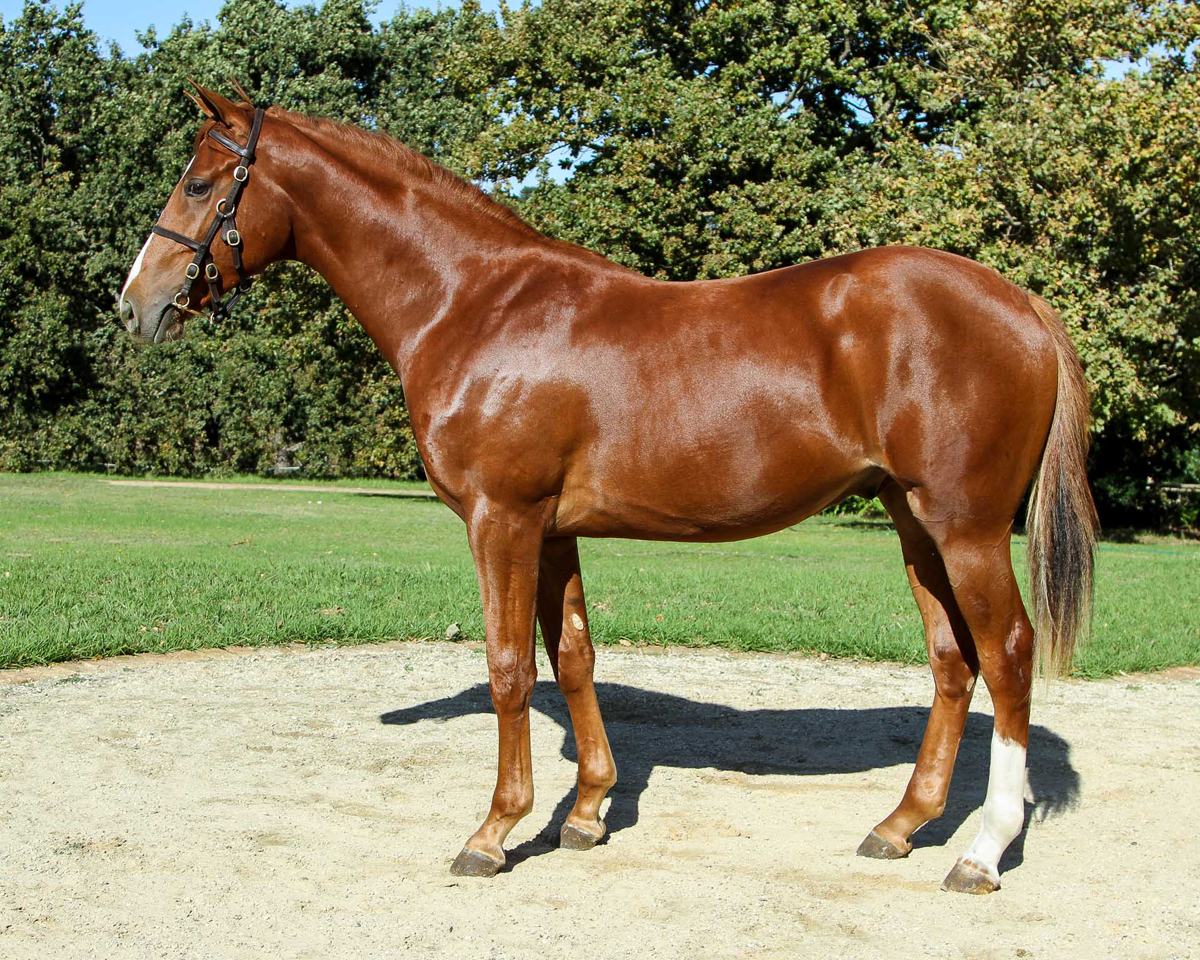
President Trump is now fake news according to the National Horseracing Authority.
Three days after The Racegoer page broke the story that the equine President Trump had been gelded ( http://www.goldcircle.co.za/trump-speechless-gelding/ ) South African racing’s ruling body decided it should act and demand the name be changed –by which time the news, together with Justin Snaith’s “vocal, unruly, unmanageable, a nightmare to work with” comments, had gone viral on social media and been taken up by newspapers all over the world.
The NHA’s foal registration expert Samantha Dames emailed Snaith Racing to say: “Unfortunately, with Donald Trump being President, the opinion of the NHA is that the name has now become problematic.”
Seemingly there had been no such concerns when the NHA originally registered the name and nor when the passport was issued. “Maybe they had a complaint from the White House,” observed Jonathan Snaith drily before requesting that the name be changed to Potus.
By this time, though, Ms Dames’ mind was tuned into the Snaith wavelength and she quickly spotted what they were up to. “We unfortunately cannot allow Potus as management feels that name is too controversial,” she emailed. As she pointed out, it is an acronym for President of the United States!
Snaith then applied for the name Fake News for the horse who has had more publicity than any other who has yet to see a racecourse – and apparently this name is going to be approved.
By Michael Clower
Champagne weekend for Vin Fizz
PUBLISHED: March 27, 2017
Vin Fizz progeny adds accolades to her record…
The outstanding Summerhill Stud mare Vin Fizz added two more accolades to her glittering record when her son Champagne Haze won the Gr 2 Senor Santa Stakes over 1160m at Turffontein on Saturday and her daughter Belle Rose won the Listed Oaks Trial over 2000m.
The Gary Alexander-trained Champagne Haze, who has not won beyond 1450m, proved speed was what he was all about when bursting through under Gavin Lerena to win going away by two lengths from the speedy Gr 3-winning three-year-old filly Wrecking Ball. The favourite Bull Valley, who is a bull of a horse, was pipped for third but will come on from the run and will no doubt be a big runner in the Gr 1 Computaform Sprint over 1000m on May 6.
Champagne Haze (JC Photographics)
In the Listed Oaks Trial Belle Rose carried joint-topweight and showed a lot of heart under Callan Murray to stave off the persistent challenge of the other topweight Wind Chill and win by 0,2 lengths. The unexposed Silvano filly Parabola, to whom they were giving 5,5kg, was a further 1,3 lengths back in third. Consequently, Belle Rose put herself in the Gr 1 SA Fillies Classic (1800m) picture. The form will also put Oriental Oak in with a chance next Saturday, as she beat Wind Chill by 1,75 lengths over 2000m last time when receiving 1,5kg. However, both fillies will have to go some to beat the comfortable Gr 2 Wilgerbosdrift Gauteng Fillies Guineas winner Smiling Blue Eyes, as well as the like of Orchid Island and Babbling Brook, who will both appreciate the step up to 1800m.
Champagne Haze is by Kahal and Belle Rose is by the stamina influence Golden Sword. Their half-brother Pierre Jourdan (Parade Leader) was the first to give notice of Vin Fizz’s influence, winning the first two legs of the Triple Crown in 2010, among other feature race successes.
In the Gr 2 Colorado King Stakes on Saturday, the Johan Janse van Vuuren-trained Australian-bred Teofilio colt Brazuca proved he stays the testing Turffontein 2000m when winning by a comfortable 3,1 lengths under Gavin Lerena. The runner up Deo Juvente, who was giving the winner 1kg, should come on from the run and will be a runner in the lucrative Gr 1 Premier’s Champion Challenge over the same course and distance on May 6. Third-placed French Navy clearly takes a while to get to his peak and master trainer Sean Tarry will no doubt have him spot on again for the Champions Challenge.
In the other big races on Saturday, the Corne Spies-trained Sail From Seattle filly Seattle Singer bounced back to her best to win the Gr 3 Sycamore Sprint over 1160m under Craig Zackey at odds of 28/1.
The Geoff Woodruff-trained Mogok gelding Pagoda easily won the Listed Derby Trial over 2000m under Gavin Lerena, signalling his SA Derby credentials, although he was only running off an 84 merit rating.
Lerena’s feature race treble thrilled his many fans, who were becoming concerned about the national log-leading jockeys rare drought of 71 rides without a winner.
He is now seven clear of Greg Cheyne in the race for the National Championship.
By David Thiselton

Ramsden on a roll
PUBLISHED: March 27, 2017
Trainer Joey Ramsden’s good form with two-year-olds continued at Kenilworth on Saturday…
Joey Ramsden is beginning to mop up the Cape Town two-year-old races like a sponge and two more at Kenilworth on Saturday mean that he has now won five of the last seven plus the only Listed event so far.

Joey Ramsden
Ossie Noach, who went on to win the last on the Glen Puller-trained Best Nut Ever, was able to make the most of a chance ride on 11-1 shot Speedpoint while Keagan de Melo made all on Favola to follow up Friday evening’s Greyville double.
Favola, Italian for fairy tale according to part-owner Gisela Burg, was backed from 8-1 to 9-2 and had odds-on stable companion Dynasty’s Blossom nearly two lengths back third. Ramsden sees a future for both fillies.
He said: “We will keep going for a bit with Favola. When Sihle Cele rode her first time his saddle was the size of my hand and it dug into her back while the next time she got into all sorts of trouble. Dynasty’s Blossom is a very nice filly but she needs to strengthen up so I may put here away. She reminds me a lot of Just Sensual.”
The Cape Fillies Guineas winner was put aside to develop after only one juvenile run and did not reappear until eight weeks before her classic triumph. Professor Brian, though, is belatedly making hay and the extraordinary way he completed a hat-trick in the 1 200m handicap suggests there is plenty of improvement still in the tank.
The 15-10 favourite, who carries Bernard Kantor’s colours but is part-owned by Brian and Kathy Finch, lost three lengths at the start and was soon six lengths off the pace. Grant van Niekerk had to switch left then right to get a run – “the jockey in front of me lugged in” – yet his mount was able to come away to win comfortably.
“He went in the wind even before his first start,” recalled Ramsden who put this year’s sustained improvement down to gelding as well as the wind op.

Richard Fourie (Nkosi Hlophe)
Apparently, though, it was nothing like so straightforward with the similarly-transformed Shall Be Free who made it four wins and a second from his last five starts under Richard Fourie in the mile handicap.
“It has taken me some time to figure him out and find his little quirks,” said Mike Robinson, the pained expression on his face reflecting weeks of mental torture as he sought to find the solution. Breeder and part-owner, Peter de Beyer, though, seemed to suggest it was all too obvious. “Simple really,” he said. “He doesn’t like going between other horses. He has to come either inside them, or outside.”
Fourie is only six short of his century after following up on top weight Big Ed in the Tab Handicap. Unfortunately the six-year-old entire pulled up sore and his rider had to dismount before the winner’s box. “He has done this before,” pointed out a hopeful-sounding Shane Humby.
Dean Kannemeyer decided to ease off with Weston when his Milnerton stable was hit by that well-publicised virus two months ago and he felt understandably vindicated when Grant Behr’s mount defied an 11-week absence in the Racing Association Maiden.
It was only in the last gasp that Aldo Domeyer got up on warm favourite Twilight Trip in the mile maiden but both he and Candice Bass-Robinson reckon there is more to come with the trainer explaining: “He is a big angular horse who has ability – it’s just a matter of putting it all together. We trained his mother, Love Is In The Air, who won the 2010 Majorca and he will improve.”
By Michael Clower