

Blinkers can make the difference
PUBLISHED: February 7, 2018
Narrowly beaten first time out in blinkers, Parallelogram can go one better when she runs in a qualified maiden at Greyville today…
A veteran trainer of yore, who often questioned the use of blinkers by his colleagues but himself using them effectively, labelled it ‘kicking for touch’.
The truth be told, blinkers don’t always have the desired effect especially if they are the last resort for a slow horse, but there is a plethora of evidence that shows that they do work for some horses who, for many reasons, are either shirking their duties or simply need to concentrate.
After a string of modest performances, Mark Dixon ‘kicked for touch’ and the result was instant. Narrowly beaten first time out in blinkers, Parallelogram can go one better when she runs in a qualified maiden at Greyville today.

Mark Dixon
However, given the fare on offer, a mix of weak maidens and lower handicaps, it’s not a card to stake your life on but Parallelogram should be one of the better bets on the card. She teams up with apprentice Ashton Arries again and from an inside draw she has a lot going for her.
The poly track was the saving grace for Ginger Biscuit who tries for a fourth win on the bounce in the Interbet Handicap. Keagan de Melo is unbeaten on Pat Lunn’s mare who has recorded six of her seven wins on the synthetic surface.
De Melo has obvious found the key and Ginger Biscuit has come from well off the pace in her last three.
And there should be pace aplenty with top weight Yaas and Flamboyant both likely to be up there from the jump.
Yaas is lightly raced and Louis Goosen’s filly was caught late over the Scottsville shortcut last time out with the going posted as yielding. Yaas is lightning quick on the poly and the addition of a tongue-tie appears to have made a difference so Ginger Biscuit could be hard-pressed to peg her back.
Lucky Veil is one-for-one over course and distance when he lines up in the Itsarush.co.za Handicap but this is not a race to go light in for the exotics. Darryl and Ivan Moore had a winner at Scottsville on Sunday and have a chance of a quick double with Lucky Veil.
The gelding nearly caused a major boil-over when a close-up third behind Q The Music last time at odds of 55-1. He is likely to start in single figures today after that showing and his chances look bright now that he is back on the poly. But as mentioned, not a race to go light in. Graduate has turned in two smart performances since starting out while Roy’s Marciano and course and distance specialist Fire The Rocket are others to consider.
Duncan Howells holds a strong hand in the Gold Circle Podcast Handicap with Crystal Ball and Roy’s Vogue both in with winning chances. Crystal Ball found traffic last run and will enjoy the extra while Roy’s Vogue pulled up coughing when down the field behind Haddington and is sure to put in a better performance this time around.
Both will need to get the better of Lady Li Lay, a facile winner over course and distance last time out while Zilla ran way below her best form last start and must have a chance judged on her previous form.
Quakeshake can get the Pick 6 off on a winning note as Dean Kannemeyer’s filly made marked improvement first up on the poly. She also found some market support that day after having showing little in the Cape so could not be coming to hand. The balance of the field are a fairly modest bunch but Fonteyn has done well over course and distance and does seem better than her last effort. The Gardner Girl has her first run for a new stable. She has shown some fair Highveld form and doesn’t have too be too good to feature here.
By Andrew Harrison

South African Domestic Merit Ratings on the rise – 1 March 2018
PUBLISHED: February 6, 2018
Over the last few racing seasons, a general decline in the Merit Ratings was observed, especially in relation to the large group of horses rated 70 and less…
Upon request, an analysis of average ratings of the racing population from August 2010 to present was undertaken.
Based on the research, the following was proposed:
1. Increase the domestic population by 6 rating points; effective entries 1 March 2018. (The relativity between horses remains the same).
2. The rating increase will “stretch” the population thereby reducing the “over-crowding” in the lower divisions.
3. This will only affect domestic ratings. Domestic and International Ratings are not linked and are done separately.
4. This adjustment will be effective on 1 March 2018 across the country.
The situation arose due to:
1. Guidelines limiting upward rating adjustments.
2. Race conditions restricting upward rating adjustment.
3. More aggressive rating drops for non-performance.
4. More cognizant dropping of young horses not making weight- for- age improvement.
5. “Slippage” in handicap races. i.e. Where there are more downward adjustments than horses remaining the same or going up. Where this happens in large numbers; the ratings will tend to decrease over time.
These factors are under review.
The proposed increase was accepted by the industry representatives that attended a meeting in Johannesburg on 25 October 2017 and was ratified by the National Board of the NHA.

Lazarus on the rise
PUBLISHED: February 6, 2018
Lazarus now has his eyes set on breaking a horse called Blacks A Fake’s record as the highest earning horse in Australasian history…
The accolade of best racehorse in Australasia would be given automatically to Winx by fans of flat racing, but harness racing enthusiasts would make a strong claim that the honour should belong to the New Zealand pacer Lazarus.

Winx (sahracing.com)
On Saturday night at Melton in Victoria Lazarus joined Winx as a winner of 15 Group 1 races when winning the A$500,000 A G Hunter Cup over 2760m in sensational fashion. He lowered the track record in the process and at the same time became the richest pacer in New Zealand history.
Lazarus now has his eyes set on breaking a horse called Blacks A Fake’s record as the highest earning horse in Australasian history. He is currently the third highest earner and is still more than A$1 million shy of Blacks A Fake’s record.
However, he has the $750,000 Miracle Mile at Menangle on February 24 as his next target and will contest a prelude there on February 17.
Lazarus will need to win the Miracle Mile to cement his place as one of the greatest pacers of all time because he met with a rare defeat there last year when only third behind Lennytheshark and Smolda, despite a record bet of A$28,000 being placed on him by one punter on TAB Fixed Odds.
Trainer-driver Mark Purdon was worried going into Saturday’s AG Hunter Cup. Lazarus had been forced to miss the West Australia Cup two weeks prior with hoof problems and then last Wednesday he was smashed in track work by his own stablemate Heaven Rocks, who himself was a brave and luckless third on Saturday night.
In South Africa harness racing does not have a big following, but it will be worth tuning in on February 24 to watch some magnificent horses in action including the mighty Lazarus.
By David Thiselton
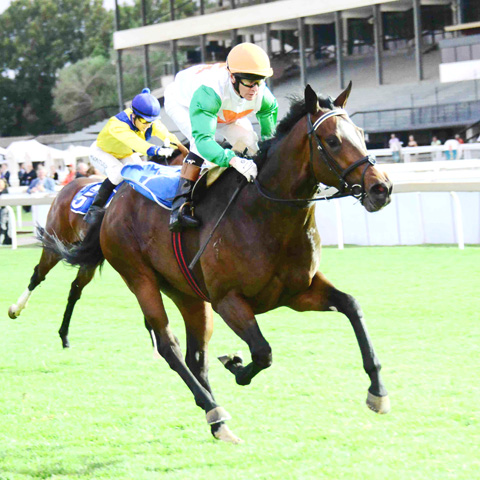
Altitude will be a factor
PUBLISHED: February 6, 2018
There are many extenuating factors to consider on the subject of thoroughbreds and altitude, such as the temperament of the horse and how well it travels…
Attention is now turned to the Highveld classic season and the question of altitude will once again be to the fore when coastal trainers consider campaigning. On the other hand Highveld trainers don’t think twice about raiding sea level features. A study of the effects of altitude on racehorses has never been done for the reason that South Africa is the only major racing country in the world where it is considered an issue.
However, South African trainers have their own theories learnt through trial and error over decades of practice. Athletic performance in thoroughbreds, as in humans, is interlinked with oxygen supply. Haemoglobin, an iron-containing protein within the red blood cell, carries oxygen to the rest of the body and the more haemoglobin present the more that can be carried. However, when the number of red blood cells is too large there is a traffic jam effect and blood flow is restricted. This is termed haemo-concentrating and is chiefly associated with intact males.
Gelding can help solve haemo-concentration and apparently long, slow work is another relieving influence. Additives can provide the raw material to create haemoglobin, but the only thing that causes haemoglobin to rise is exercise. The aim of training is to stress the system, so that bone marrow makes more haemoglobin for the workload. A gradual increase in workload is therefore best. Scientific studies done on the impact of altitude on human athletes is unlikely to be of much use in thoroughbreds as they have different makeups to humans.
Firstly, over realistic distances, thoroughbreds are physiologically more capable of adapting to high altitude than human athletes, because a horse’s spleen holds approximately one third of its total red blood cells and these are hold in reserve until mobilised through exercise, stress and excitement. However, the measurement of haemoglobin and red blood cell content in horses can’t always be exact because even the anticipation of the needle can cause excitement and the consequent release of the splenic blood.
Furthermore, there is a debate in literature as to which component of splenic blood is more important in the development of VO2 max in racehorses. VO2 max is the maximum capacity of an athlete’s body to transport and use oxygen during incremental exercise. Some evidence suggests that the overall increase in circulating blood volume is more important.
However, other evidence suggests that the increase in circulating red cells and Heamatocrit (the volume percentage of red blood cells in blood), independent of volume, are more important. Furthermore, it has been discovered that horses have two types of red blood cells, one being rigid and the other balloon-like. Horses with more of the balloon-like cells will find it easier to move blood into the muscles and the lungs. On average horses have 40% rigid and 60% fluid cells, but a horse with only 5% rigid cells would have a tremendous advantage, all else being equal, and this may be an area that explains why some horses are superior to their fellows.
South African trainers generally believe that horses have to be worked harder at altitude. In order to get a horse fitter it has to reach a stage where it is in oxygen debt. Incrementally, a horse will be worked to reach this stage until it is fit enough to race, and at altitude horses need to be fitter to race because the oxygen content of the air is less. It stands to reason that a horse trained at high altitude that will start going into oxygen debt at the 400m mark in a Highveld race might still be debt free by the 200m mark when raiding at sea level.
However, Corné Spies, who is probably the most travelled trainer in South Africa currently, has been quoted as saying, “If the horses stay at the coast after their runs they tend to go flat. It would take about six weeks or two months for them to acclimatise and they would then begin to thrive. But taking them in and out is not a problem, so I ship them up and down to keep the positive effect of high altitude training.”
It is also generally agreed that horses raiding the Highveld from the coast would struggle at distances beyond a mile. Horses raiding out of Summerveld have done it, but Geoff Woodruff, a five-times National Champion trainer, who has plenty of experience of training on both the coast and at altitude, pointed out that Summerveld is already a third of the altitude of the Highveld. It is also generally agreed that coastal horses campaigning on the Highveld hit a flat spot at roundabout the 19 day mark that can last for a week or so, although Woodruff believes it takes three to six months for a horse to acclimatise to altitude, unless it’s a sprint-miler.
There are many extenuating factors to consider on the subject of thoroughbreds and altitude, such as the temperament of the horse and how well it travels.
However, there are those who would say, “If a horse is good enough, it would win on the moon.”
By David Thiselton

Live Life back in form
PUBLISHED: February 6, 2018
“I feel Live Life could have finished even closer than she did and, while I will play it by ear, she will either go for the Computaform or the South African (City of Pietermaritzburg) Fillies Sprint at Scottsville three weeks later.”…
Live Life, having bounced back to form to take third in the Betting World Cape Flying Championship, could take on the likes of Trip To Heaven again in the Computaform Sprint at Turffontein on 5 May.
Candice Bass-Robinson said: “I feel Live Life could have finished even closer than she did and, while I will play it by ear, she will either go for the Computaform or the South African (City of Pietermaritzburg) Fillies Sprint at Scottsville three weeks later.”
Dutch Philip and Magical Wonderland, first and third in the CTS 1200, are both earmarked for Scottsville’s quadruple Grade 1 day.

Dutch Philip (Liesl King)
Mrs Robinson said: “They have gone to the farm for a short break and will be back in three weeks. Dutch Philip will run in the Tsogo Sun Sprint and Magical Wonderland in the Fillies Sprint but they won’t go to Durban – I will raid from Cape Town.”
Brett Crawford is toying with the idea of giving the Durban season a miss with CTS 1600 winner Undercover Agent and he explained: “The problem with going to Durban with a three-year-old colt is that there is only the one good race to go for (Daisy Guineas) before you have to go a trip or take on the older horses. He is rated 97 so it wouldn’t make sense to do the latter.
“I will have to think about it and talk to the owners (Greg Bortz and Braam van Huyssteen) but I might keep him in Cape Town and go for the Winter Guineas.”
High class stable companions Captain America and Sail South will be aimed at the Rising Sun Gold Challenge (9 June) and the Champions Cup (28 July). Captain America won the former last season and was second to Sail South in the Champions Cup.
Crawford also has charge of Charles, the Trippi colt bought by Coolmore’s M.V. Magnier for a record-equalling R6 million at last year’s CTS Premier Yearling Sale – “He is still some way off a run but he was on the grass last Thursday and is doing everything right.”
Last week’s Tattersalls February Sales generated some much-needed funds for Mayfair Speculators and the racing company’s bankers. Derby hopeful Willie John set a record for the sale when bought by trainer Roger Varian for 1.9 million gns (nearly R34 million). The Dansili colt cost little more than a sixth of that.
However second-hand horses are like cars in that their value tends tend to drop sharply the minute they leave the showrooms and the five mares also partly owned by Markus Jooste that made a total of 1 770 000gns (R31.5 million) cost virtually twice that figure when purchased as yearlings
– The number of trainers involved in the NHA’s caffeine-contaminated feedstuffs investigation is now known to be at least 13, three domiciled in Cape Town and five each in Johannesburg and KZN. All have engaged Robert Bloomberg to act for them.
There were at least 18 positives in July, August and September. The most high profile case is believed to be a horse that ran prominently in the Durban July. No date has yet been set for the hearing.
By Michael Clower