
Kingsmead to hit them for six
PUBLISHED: March 27, 2019
Kingsmead finished behind Cumulus – also in this race – last run but the former has shown his best form over today’s course and distance…
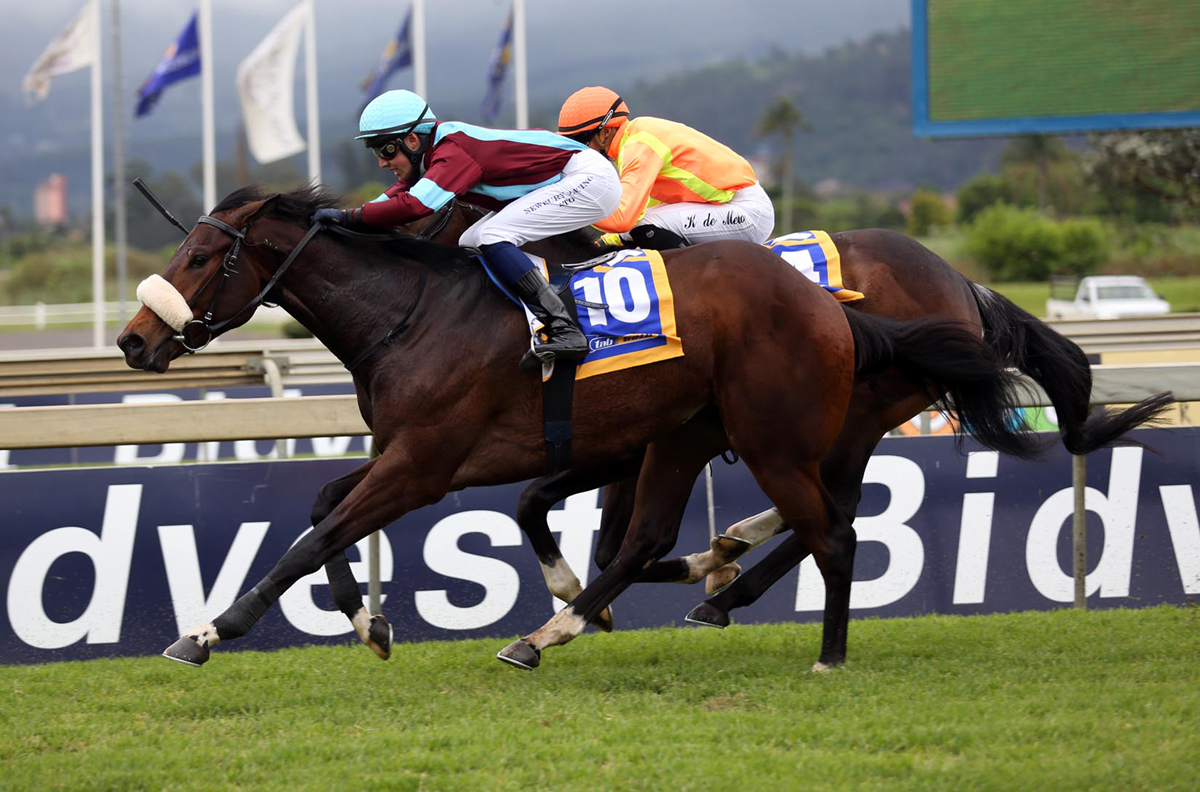
Punters face a tricky card on the Greyville poly today, the opening leg of the Pick 6 an example with any one of the nine runners in with a winning chance. Michael Roberts saddles Kingsmead who reverts to his favourite course and distance and who looks due for a change of fortune after a string of runner-up berths on the poly.
Kingsmead finished behind Cumulus – also in this race – last run but the former has shown his best form over today’s course and distance and can turn the tables. Louis Goosen is a wizz with sprinters and Di Mazzio is quick and goes well on the poly. Apprentice Jason Gates is full value for his 2.5kg claim if he can keep it all together, but Di Mazzio is still 2.5kg worse off with Kinsgmead given their last meeting.

These three look the principal contenders but a win for any of the field would not come as a major surprise.
In the first race, the Chesney van Zyl-trained Clear Horizons trialled well and then made a smart debut proper when a close-up second to the well-regarded Highveld raider Sarah from the red-hot Paul Peter yard. The experience could give her an edge over first-timer Naoshima and Nymeria who comes from a Highveld stable that does well with juveniles and she has improved with each outing.
If the ratings prove correct, the opening leg of the Pick 6 looks a straight fight between Moschino and Master Of The Sea. Both step up in trip and there was little more than a length between the two when last they met. Moschino is proven on the poly while Master Of The Sea makes his poly debut for Paul Gadsby.
The fourth looks a little more difficult. There should be little between Jamaican Bay and Orient Express, the pair finishing on top of each other in their last outing. Both have consistent form but the latter may just be the right one although Belle Of Paris found strong market support at her last start. This possibly because Marcus was riding and the filly sporting blinkers for the first time but she had some fair form prior to that and now has a 4kg claimer aboard.
The fifth is another tricky race although Forehand impressed with her last win. She still looks capable of better and can follow up but Sweet Mary Lou has been racing in strong feature company and takes a major drop in class. She is back over what looks to be her optimum trip and Forehand will need to make the necessary improvement.
In the sixth, Legend is the class act and if he is ever going to win another race it is this one. He has a fair weight but takes a major drop in class and has also come down a further two pounds in the ratings. Samsonite was not far behind Legend when last they met and this will be his second run after a break so could make further improvement while March Preview showed up well after a lengthy break and is another than can improve off a light weight.
If Nymeria doesn’t do it for Paul Matchett in the first race, Atrevete can supply the travelling expenses in the seventh. She was ante-post favourite for her poly debut before being scratched (no transport) and her Highveld form is promising. The danger could be Spanish Oasis who showed major improvement when tried on the poly in PE. She is lightly raced and should feature here.
If Spanish Oasis obliges, Andre Nel will be looking for a double with Selailai in the last. He is lightly raced and showed up well first up in his local debut on the poly. He looks a live-wire. Ruby Spirit won well in the maidens from a tricky draw. He too showed up well on the poly in his barrier trial so could feature prominently.
By Andrew Harrison
Philippi down to four trainers
PUBLISHED: March 26, 2019
Robinson moved to Philippi from a private trainer’s job at Drakenstein to become a public trainer in 2013. He mentally ticks off those who are…
And then there were four. The number of trainers at Philippi has dropped to the lowest that any of the present trainers can remember. The only ones left are Brett Crawford, Mike Robinson, Mohammed Allie and Justin Snaith who has his own place across the road but rents a 30-box yard and makes use of the facilities.
“When I started training (in 1974) the place was at the height of its popularity and it was full,” recalls Stan Elley. “I had to take a yard down the road and I had my name down on a waiting list for what seemed forever. When I did eventually get in there were ten trainers and there were still six or seven when I finished in 2015.”

Robinson moved to Philippi from a private trainer’s job at Drakenstein to become a public trainer in 2013. He mentally ticks off those who are there no longer – “Stephen Page emigrated (to Australia where he now assists Winx’s trainer Chris Waller), Stan retired and so did Carl Burger and now Riaan van Reenen has joined Glen Puller.”
Crawford set up shop there in 2009 with not much more than an empty stable and a huge reputation. He has built on the latter and now has one of the biggest and most powerful strings in the country. If ever Philippi needed an advertisement, his success is it.
“The tracks are the best in Cape Town,” says Robinson who operates with a string of 30. “They are all sand and we have a light track and a heavy one plus an 800m circular one that we use for hacking. The horses love the sand, the open spaces and there being plenty of room.”
Elley indicates that he also considers it better than Milnerton and adds: “The tracks are better and, while it may not be aesthetically pleasing, the fact is that horses thrive there.”
“The tracks are the kindest in the country. It’s virtually impossible to break a horse down on them,” says Chris Snaith. “And look how well Dennis Drier does from there every Cape season.”
So why has it become unpopular? “I don’t think it has,” says Robinson. “It’s just that the numbers have been dropping. We need to persuade more owners to bring their horses here,” and he adds, tongue in cheek, “but not to Brett and Justin – they have got enough!”
Van Reenen’s decision to hand in his licence was based on economics and has triggered a flood of website suggestions about limiting the number of horses that a trainer should be allowed and, even worse, the number than any one owner can have with a single trainer. Any such move would surely sour the bigger owners at a time when racing needs them like never before.
Unless he is unbelievably good, a trainer needs to be a salesman and his principal product is himself (or herself). “Horses don’t come to you, you have to go out looking for owners,” says Chris Snaith whose lessons have been learned over almost half a century that includes the 1991 July winner Flaming Rock. “You also have to give your owners the information about their horses that they are looking for. If you don’t, they will move them to someone who will.”
By Michael Clower
Hawwaam to deliver
PUBLISHED: March 26, 2019
The highlight of the local meeting will be the appearance of the Mike de Kock-trained Hawwaam in the Derby. He is not the highest merit rated horse…
There will be a feast of racing this Saturday with the Dubai World Cup meeting coinciding with the SA Derby meeting at Turffontein.
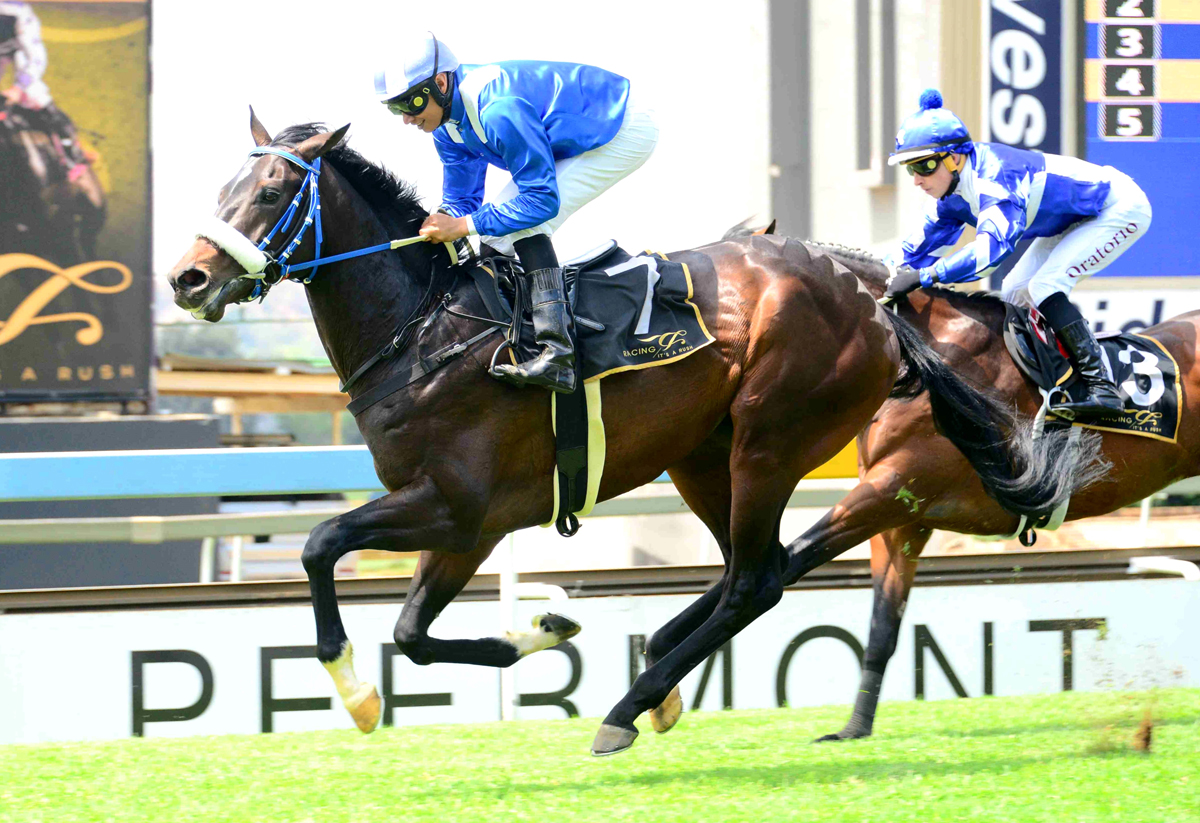
The highlight of the local meeting will be the appearance of the Mike de Kock-trained Hawwaam in the Derby. He is not the highest merit rated horse in South Africa, but was accorded the highest ranking among SA horses in the first edition of the LONGINES World’s Best Racehorse Rankings for 2019. The ranking assessments were made on three-year-olds and upwards which raced between 1st January 2019 and 10th March 2019.
He was assessed to have put in the tenth best performance in the world for that period and was given a rating of 119. Do It Again, Rainbow Bridge and National Park were given 118 ratings.
The South African handicappers have him on a 121 merit rating, behind all of Do It Again (125), Rainbow Bridge (124), Soqrat (124) and Head Honcho (122).

Matthew de Kock has no doubt Hawwaam will get the 2450m trip on the basis of his pedigree and physical capacity.
However, there is a concern about his “his attitude”, but Matthew added, “We seem to be winning the battle.”
The Silvano colt over-raced a bit in both the Three Troikas over 1400m and the Gauteng Guineas.
However, he settled in the Grade 1 SA Classic last time over 1800m and this enabled him to produce the same devastating turn of foot he had found in the Dingaans. He won the Dingaans by 3,40 lengths and the SA Classic by 5,75 lengths.
Mike de Kock thanked renowned bit expert “Bomber” Nel for his assistance in getting Hawwaam to deliver his best in the SA Classic.
He was quoted on www.turftalk.co.za saying the day after the SA Classic, “The way Hawwaam threw his head around after the Guineas was a bit rank, so I called in Bomber’s help, he’s an authority on bits and exports his equipment all over the world. Bomber and I spent a day together, it was fascinating to tap into his knowledge. He made an adjustment to Hawwaam’s bit and it’s the little things that make a big difference, as Hawwaam showed yesterday.”
The legendary De Kock-trained SA Triple Crown winner Horse Chestnut went into the SA Derby with some questioning his stamina, but won at a canter by almost ten lengths. Hawwaam is out of contention for the Triple Crown as he finished second in the Gauteng Guineas, his only career defeat, but it is clear De Kock also rates him something special.
“I came off my chair, I got goose bumps,” De Kock told Turf Talk from Melbourne, Australia, from where he watched the SA Classic in a TAB outlet in the Victoria capital. “I don’t know what to say. It was spooky, actually. That was the Hawwaam I know and he’s a proper horse, even more so because I think the runner-up Barahin is top class, I know what I think of Barahin,” De Kock added.
World Sports Betting are taking no chances and have Hawwaam at 1/6 for Saturday’s race.
Of the other contenders the Tyrone Zackey-trained Gift For The Gap, at 22/1, makes appeal as one who will get the trip and who is on the up.
He caught the eye in his penultimate start over 2000m on Turffontein Standside when getting going late and surging in the closing stages.
Then in his last start over that same 2000m course and distance he came from near the back of the field with a strong finish to win the Listed Derby Trial by half-a-length carrying 56kg off an 85 merit rating.
However, the most impressive aspect of the win was the horse’s obvious immaturity.
Here is a 16 hands plus individual with plenty of scope for improvement.
Zackey said, “He still has a lot to learn, how much I can’t tell you, but he is one of those nice horses who is going to win a good few races if I place him right. He is going to be a good stayer, I know he will be up against some good horses in the Derby but we like to have a go, we really enjoy it. When you’ve got a stayer it’s a big plus. For races like the July and the Gold Cup you need that type of horse and he’s also got to have a nice turn of foot. When you’ve got one who is able to come from the back the way he did on in the Derby Trial, you know you’ve got a fair horse. We had a big downpour beforehand too and he only has small hooves, so he did very well.”
The Zackey yard’s most loyal supporters are Kevin and Nadine Backos, his son-in-law and daughter respectively, and they have a share in Gift For The Gap.
Zackey recalled, “We went to the sales and Nadine came to me and told me she had seen a Master Of My Fate colt she just loved and I had to come and have a look. She is a lucky girl and has a good eye for a horse. The horse was this lovely dark brown colour and had a very nice walk but I told her and Kevin I thought he would go for a lot of money. She replied that whatever it takes we must get him and she would then set up a syndicate.”
They secured him for R200,000.
Hawwaam’s attitude will be tested from draw 15 of 15, while Gift For The Gap also has a tricky draw of ten.
However, acceleration is a weapon in the arsenals of both horses and jockeys Gavin Lerena and Marco van Rensburg respectively can afford to drop them out.
By David Thiselton
Latin Opus is the choice
PUBLISHED: March 25, 2019
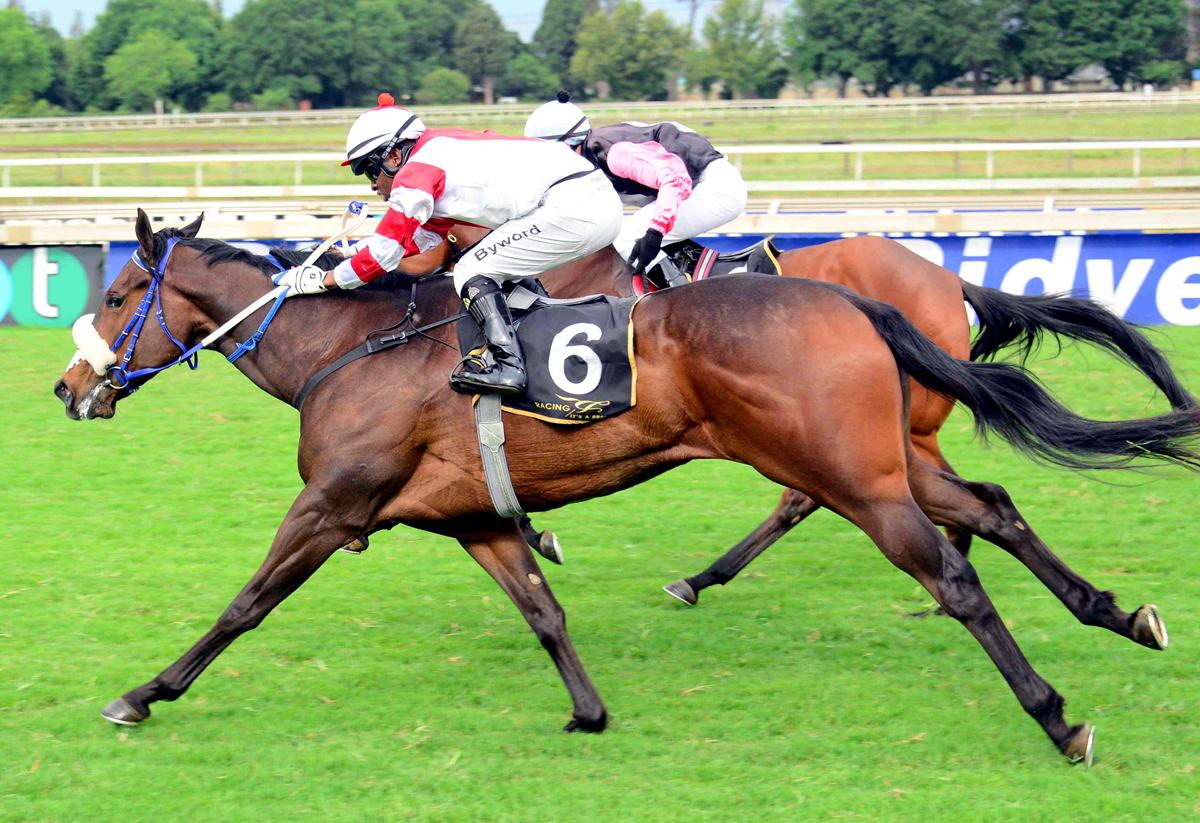
In the first leg of the Jackpot over 1600m Latin Opus is a scopey son of Pomodoro and he should relish the step up to this trip after staying on last time.
The Vaal straight course has a competitive eight race meeting tomorrow, although the exotics look catchable.
The first race will form the first leg of the Bipot and some of the many first-timers look to be the ones to side with. Upcloseandpersonal by Captain Al, Blessed Rain by Soft Falling Rain and Capetown Dream by Capetown Noir are the three which make most appeal on pedigree.
In the first leg of the PA In The Dance can be bankered. This Gimmethegreenlight filly has an exceptional turn of foot, like her half-brother Capetown Noir, and is weighted to win this Assessment Plate over 1200m easily.

In the first leg of the Pick 6 over 2000m both Julep and Hit For Six are up and coming three-year-olds who will relish this step up in trip and they can fight it out with Mighty Rock who is proven over the trip.
In the first leg of the Jackpot over 1600m Latin Opus is a scopey son of Pomodoro and he should relish the step up to this trip after staying on last time over 1400m. He is still maturing so should continually improve and is the one to beat. He could be a banker consideration from a good draw. Verdi ran well in his penultimate start over this trip but has a wide draw to overcome. The Makwakkers was beaten by Verdi in that race but was a touch unlucky and could reverse form from a plum draw here, so he can also be included. The Greatest Wish has shown signs of ability and should be ideally distance suited so he warrants consideration from a good draw. Colonel Caramel is a long-striding sort who is capable of a strong finish and he is a probable outsider to include.
In race five over 1600m Approach Control makes appeal from a fair draw. He was not disgraced in either the Gauteng Guineas or SA Classic and before that was touched off by useful sorts Green Haze and Hero’s Honour in two respective races over this trip. Officially he is 3,5kg under sufferance with Alyaasaat but he beat the latter at level weights in both the Guineas and the Classic and now receives 3kg from him. Alyaasaat beat Soqrat over 1450m at the beginning of the season but has disappointed in the Graham Back, Guineas and Classic since then. He could bounce back in this lesser company. Protea Paradise is a progressive sort who will find this a touch sharp but he should be running on and can be considered. Ghaalla is the best weighted horse but gained her rating from her Grade 3 Fillies Mile win where the form could be questioned as second-paced I Like it was lowly rated and third-placed Ronnie’s Candy did not have luck in running that day. She was also well beaten into third when well weighted on Saturday, although she was nearly brought down in that race so could be forgiven. Anjom disappointed badly last time having struck as one who did have scope for improvement.
In the sixth race over 1600m Dame Kelly has always struck as one with class and she won going away in commanding fashion last time over this trip. She can follow up off a merit rating of 82, which she has proven before to be better than. My Dream Chaser also has a touch of class and is progressing. She can rise above a 77 merit rating and is well drawn. Flying Fable carries topweight but has ability and is well drawn over a suitable trip. Believe Me is progressing in the typical style of a Silvano filly and is capable of coming from off the pace from a tough draw, so she has to be included in the Jackpot and Pick 6. Only To Win is an honest sort who can’t be ignored either, despite a wide draw, and Lady Val is well regarded so could also be in the shake up. State Star should be right there too.
In the seventh over 1000m Dalai’s Promise caught the eye in the preliminaries last time and then only just failed behind the promising Mr Whatson, so she should go close with a 2,5kg claimer up. Miss Khalifa is well regarded and this speedster will have a chance of blitzing the field now that she is back on a relatively quick Highveld track. Dancing Queen has come into her own and can go close too. For wider Elbi, Opera and Ulla can also be considered.
In the last race over 1200m Palace Assembly is capable of still improving and gets the vote over an ideal trip. Certifiable has to be included over a course and distance he enjoys. Sugoi is a well built sprinter and on pedigree he should enjoy stepping up to 1200m. Moon Warrior is close to Certifiable on form and Sporting Monarch also has to be included in the Jackpot and Pick 6 over an ideal course and distance.
By David Thiselton
Fresnaye aiming for Empress Stakes
PUBLISHED: March 25, 2019
Fresnaye, who carries the same Drakenstein colours as Inara, has a string of recent high class performances to her name…
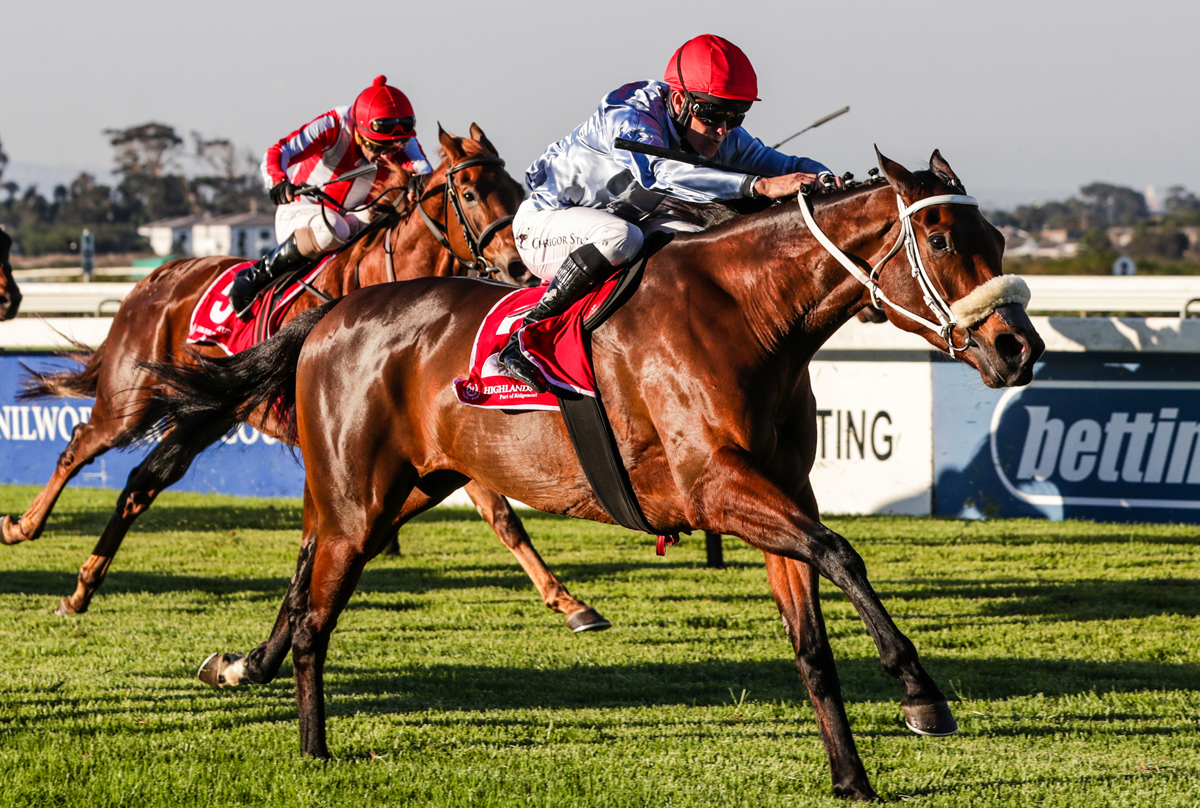
Joey Ramsden is aiming Fresnaye at the Princess Charlene Empress Club Stakes at Turffontein on April 13, hence the filly’s run in a 1 400m conditions plate at the Johannesburg course nine days ago when she ran on into third behind Celtic Sea.

Ramsden said: “I was very pleased with that. I had done nothing with her yet she quickened quite nicely.”
The Empress Club has proved a happy hunting ground for Cape Town horses on occasion in the past. Justin Snaith won the mile Grade 1 with Dancer’s Daughter ten years ago, Brett Crawford scored with Thunder Dance in 2013 and Mike Bass won with Inara three years later. Fresnaye, who carries the same Drakenstein colours as Inara, has a string of recent high class performances to her name winning the Victress, Stormsvlei Mile and Winter Oaks last year while this year she was fourth in both the Paddock Stakes and the Majorca.
Ramsden has a 24 % strike rate in Gauteng this season (“I must be picking the right ones to send up there”) and he is targeting a second Computaform Sprint on May 4 with last year’s first and third, Attenborough and Speedpoint. The plan is to give both just one prep run beforehand.
On the Durban front Cape Guineas runner-up Twist Of Fate (winner of the Cape Classic, Politician and nearly R2 million) leaves Cape Town at the end of this month and will probably begin his campaign there in the KRA Guineas on May 3.
BLOB The stable’s recent Prix Du Cap winner Rose In Bloom (also second in the Sceptre and third in the Majorca) looks like staying with Ramsden for the rest of her racing career after being bought for R800 000 by stud owner Stefan Moller at Saturday evening’s small Central Route Trading sale.
By Michael Clower