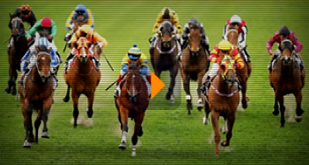
A ban of the whip has been gaining momentum in the UK and Phumelela have showed their support for this movement by staging a race at Turffontein on Saturday in which jockeys will not be permitted to use whips.
Saturday sees the running of the R1-million Peermont Emperors Charity Mile and Clyde Basel, on-course sales and marketing executive for Phumelela, views the meeting as an ideal opportunity to introduce whip-free racing to the public. “Being Charity Mile we want to show that we are willing to take a positive step forward for those who support a welfare approach to the role of animals in our lives,” he said.
“As a responsible operator/regulator there is a view that the current rules and penalties around the use of the whip are simply not good enough and can be both improved and made clearer.
“Obviously much research still needs to be done but this is a perfect trial for Charity Mile day with the newbies (celebrities and the like) all watching, and in particular all the horse-related charities who will welcome this concept with open arms.”
Jockey Piere Strydom has been a keen exponent of the innovative move. “While the whips do not inflict pain on the horse, it still does a lot of damage to the image of the sport.
“I feel this is a very positive move and I congratulate the operator for coming up with the concept,” said Strydom.

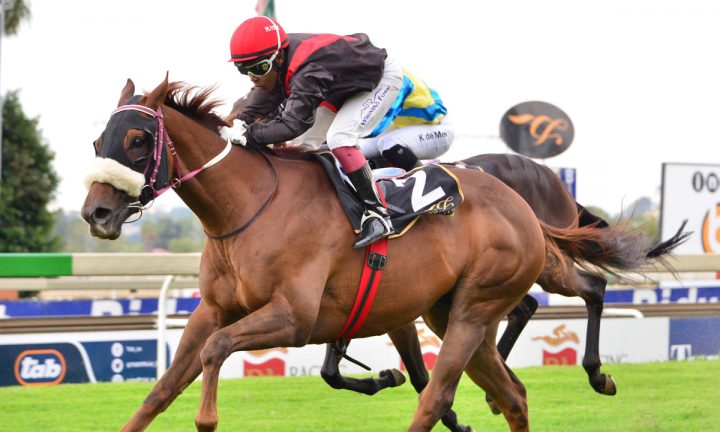
Coral Fever (JC Photographics)
Trainer Mike de Kock is another staunch supporter. “The first question we get from newcomers to the sport is ‘why do we whip horses’. It gives the sport a very poor image and I’ve been pushing his idea for months.
“There are no negatives. It can only be positive for horseracing.”
In 2011 The British Horseracing Authority (BHA) had a ten month review of the use of the whip and as a result they made new whip restrictions and instituted more severe penalties for whip offenses.
However at the time racing pundit John McCririck believed the sport had missed an ideal opportunity to boost its image by failing to ban hitting horses with the whip.
He described the BHA as ‘gutless’, but believed it would be just a matter of time before hitting horses would be a thing of the past.
‘We’ve been talking about the whip for 30 years and the fact is the whip is on the way out,’ he said. “There’s no other living creature on the planet you are legally allowed to hit.’
The restrictions soon had consequences as top jockey Richard Hughes threatened to hand in his jockey’s license after receiving two bans in less than a week. However, he did not follow through with the threat and won the British Jockeys Championships the following season.
The permitted number of uses of the whip with hands off the reins was restricted to seven times for Flat races and eight times for Jumps race in Britain.
Riders could only carry a specifically designed and approved energy absorbing whip.
This whip has cushioning and does not inflict nearly as much pain as the old whip did although it does make a loud noise. The use of this standardised whip is also compulsory in South Africa.
However, welfare groups want the whip banned completely and the petition Care 2 started three years ago in the USA was an eye opener in how racing outsiders view the whip.
They said, “The whip is used in horse racing to beat horses towards the end of the race when they’re tired or sore and want to slow down. This is cruel and inhumane. Yet, the horse racing industry gets away with it. Just like the bullhook, the whip is another torture device for animals. During Victor Espinoza’s ride on American Pharoah in the Kentucky Derby, he hit the horse 32 times with his whip.”
In horseracing mad Australia a poll was conducted on whether the whip should be banned and the results were interesting. Of people who never attended racing 90% said it should be banned, of those who attended once or twice a year 77% said it should be banned, those who attended more than monthly but less than weekly the figure was 47% and those who attended more than weekly it was 31%. These figures appear to show how detrimental to the sports image the whip is and with administrators around the world attempting to win new fans to the races the whip regulations probably need to be revisited.
The whip might help a horse on occasion, but is often detrimental to its cause. The best riders in the world know how to use it correctly and this is summed up by legendary South African jockey Michael “Muis” Roberts. He said he would usually give a horse a few light taps to test the response and if it was positive he would whip more freely, but would otherwise use it sparingly or not at all. “Fillies often don’t take kindly to the whip”, he said. However, Roberts also mentioned another use for the whip which most experienced racegoers would probably regard as its most important asset: when a horse begins floundering or hanging, the changing of the whip to another hand and giving it one smack can see it changing legs and finding another gear.
Hands and heels races, mainly for claiming apprentices, are regularly held in the UK. Saturday’s race at Turffontein is a welcome innovation and will likely lead to more such races.
By David Thiselton